As seen on:





Discover Life Skills and Practical Self-Defense for Kids at Combat Club NYC.
The only life skills and self-defense academy for kids in New York. Established in 2010, Combat Club is the perfect place to teach your kids self-defense, develop their fitness, and ensure they have as much fun as possible.
We’re here to strengthen the mind, body, and character of children and teenagers living in NYC. Our martial arts classes for kids aren’t just about fighting skills – we’re here to build self-confidence, leadership, fitness, and life skills.
We give children a great foundation of martial arts blending:
- Krav Maga
- Muay Thai
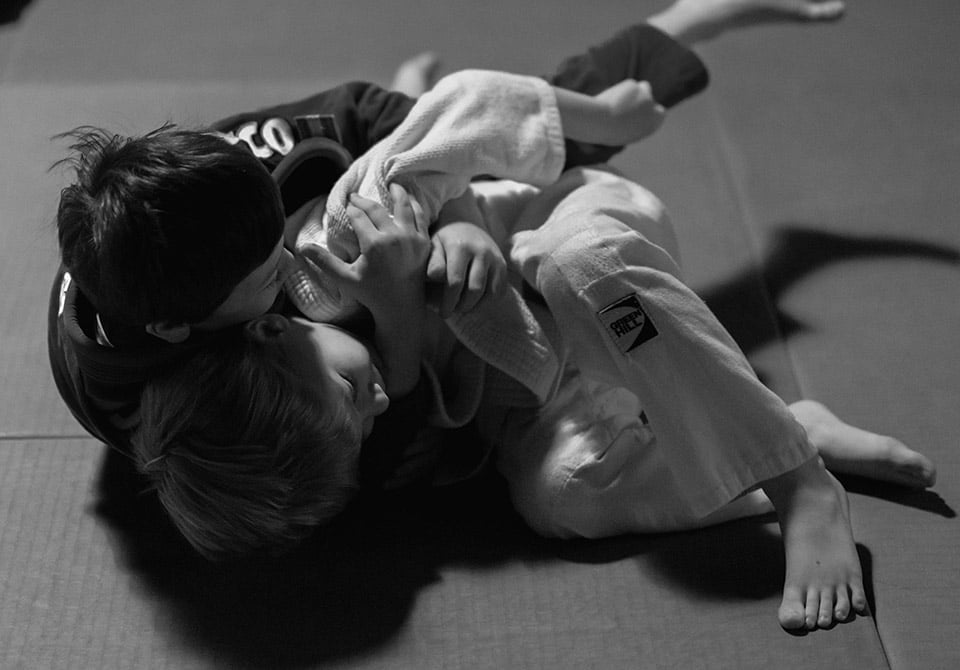
- Jiu Jitsu
- Boxing
So, if you want to help your child develop into the best version of themselves, come to our studio for a 2 week trial with a free uniform.
Start with an induction class. Choose your day and time.


KIDS SELF DEFENSE: Combat Club by KMI
From youth classes for children aged 5+ to family classes where you can develop self defense, fitness, and life skills together. Combat Club is a Foundation Program which teaches practical self defense through a hybrid martial arts system based on a combination of Krav Maga, Muay Thai, Boxing and Jiu Jitsu grappling. Our Black Belt Program also includes a Character Development and Leadership Program.
What to expect in a Combat Club class?
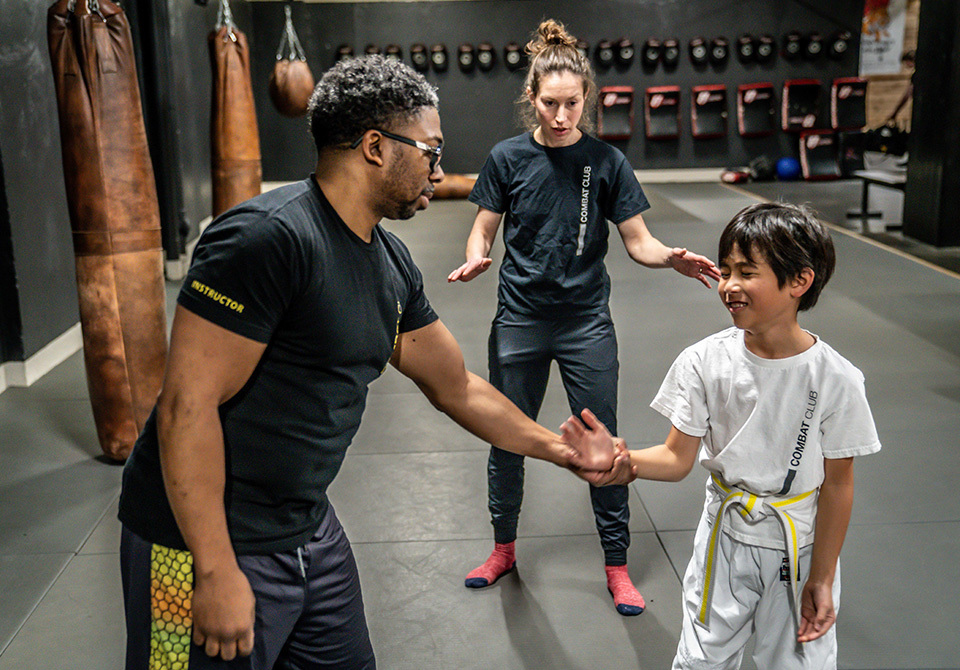
Our self-defense classes for kids start with a fun and focused warm-up. This is followed by time spent learning new skills and techniques. Throughout the 60-minute lesson, our instructors are on hand to help build the principles and soft skills needed to develop their martial arts experience.
Afterwards, the class ends with a game and summary drill to reinforce all the techniques covered during the lesson.
Your child can always expect a social and supportive environment at Combat Club. We believe our engaging and varied lessons are key to helping students learn and build confidence.
Our self-defense classes are crafted with insights from Behavioral psychologists and child development researchers, self-defense experts, fitness experts and teachers. This helps support key areas of your child’s growth, such as:
- Developing key life skills for success
- Practical self-defense
- Health and fitness
Parents Also Ask:
For children focused on practical self-defense and real-world confidence, a hybrid system outperforms any single style. Karate, taekwondo, and BJJ each develop one dimension of skill — striking, kicking, or ground defense — but leave gaps. A program combining Krav Maga, Muay Thai, Boxing, and Brazilian Jiu Jitsu develops situational awareness, striking confidence, clinch work, and ground defense together. Equally important: the best martial arts program for kids is one built around child development, not adapted from an adult fighting system. Look for age-appropriate instruction, short drill rotations that match children’s attention spans, and explicit life skills integration alongside technique. Parents consistently report that the style matters less than the teaching philosophy behind it.
Most children are ready to begin structured martial arts training from age 5. At Combat Club by KMI, the Foundation Program accepts children from age 5, with classes designed around the attention spans and motor development of young children. There is no meaningful advantage to waiting — the earlier foundational habits like focus, self-discipline, and emotional regulation are introduced, the more deeply they’re established before adolescence. Children who start young also tend to progress faster through technical skills because they’re learning movement patterns before sport habits from other activities are ingrained. That said, every child is different. The best way to assess readiness is a trial class — you’ll know within the first session.
For meaningful skill development and the life skills outcomes parents most commonly report — improved focus, confidence, and emotional regulation — two classes per week is the recommended minimum. One class per week maintains exposure but rarely produces the consistency required for habit formation. Three or more classes per week accelerates progress and is appropriate for motivated children. The key variable isn’t frequency alone — it’s consistency over time. A child attending twice a week for a full year will develop far more deeply than one attending three times a week for two months. At Combat Club by KMI, the program is structured so that children attending twice weekly follow a complete, progressive curriculum with no gaps.
Yes — and this is one of the most consistently reported outcomes from Combat Club parents. Structured martial arts training is unusually well-matched to how kinetic learners — children who learn and regulate best through movement — actually process information. Every drill requires sustained attention, physical engagement, and pattern recognition simultaneously. There is no sitting still and listening; the learning happens through the body. Combat Club’s curriculum was developed with input from behavioral psychologists specifically to build the executive function skills that support children with attention challenges: focus, emotional regulation, impulse control, and persistence. Research from Harvard Medical School and the American Physiological Society supports the link between structured physical activity and improved executive function in children. Individual results vary, and martial arts is not a substitute for professional support where that’s indicated — but parents of children with ADHD regularly tell us it’s the first structured activity their child has stayed with and looked forward to. We recommend the free 2-class trial to assess fit before committing.
For a first class or free trial, comfortable athletic clothing is all that’s needed — joggers or athletic shorts and a t-shirt. No special uniform is required before enrolling. At Combat Club by KMI, every child who completes the free 2-class trial receives a complimentary uniform, so there’s nothing to buy before you’ve decided it’s the right fit. Children should come barefoot or in socks for the mat — no shoes on the training floor. Hair should be tied back if it’s long, and jewelry should be removed before class for safety. That’s it. First classes are low-pressure — the goal is for your child to have a great experience and for you to see the program in action. Come as you are.
Tiger Schulmann’s is a sport martial arts franchise operating across 40+ locations. Combat Club by KMI is NYC’s only dedicated life skills and self-defense academy for children — a single Tribeca location, founded in 2010, 100% focused on children aged 5–14. The curriculum was developed with behavioral psychologists and child development researchers, not standardized from a franchise template. The difference shows up most clearly in what happens between the techniques: at Combat Club, roughly half of every class is structured around mindset, decision-making, situational awareness, and emotional regulation — not as supplemental content, but as structurally inseparable from real self-defense training. Parents don’t choose Combat Club over Tiger Schulmann’s because of the martial arts. They choose it because of who their child becomes.
NYMAA (New York Martial Arts Academy) has been operating since 1985 and specializes in Jeet Kune Do — Bruce Lee’s martial arts philosophy — with a program primarily designed for adult practitioners. Combat Club by KMI was built specifically for children aged 5–14, with every element of the curriculum designed around child development research, not adapted from an adult system. Combat Club also offers family classes for parents and children training together, a structured free trial with complimentary uniform, and dedicated programs for teens developing leadership skills.
Yes, when taught in a structured, purpose-built program. At Combat Club, physical safety is a curriculum priority — controlled drilling, age-appropriate protective equipment, and direct instructor supervision ensure children develop real technique without injury risk. Importantly, Combat Club’s curriculum explicitly teaches when not to use physical skills: situational awareness, de-escalation, and avoidance are taught before any physical technique, which is foundational to Krav Maga’s real-world self-defense philosophy. Children leave with better judgment, not just better technique.
BOOK YOUR TRIAL
Book Your Trial
Learn from our expert team.