Tools to Address Bullying For Kids In New York
At Combat Club, we believe that empowering children through hybrid martial arts and kids self defense training goes beyond kicks and punches. Real strength lies in knowledge, confidence, and the ability to navigate social situations. One of the biggest threats kids face today is bullying—often misunderstood and too often mishandled.
That’s why we’ve compiled a framework of 15 critical skills every child should learn to recognize, prevent, and respond to bullying. Whether you’re a parent, educator, or martial arts coach, this guide offers a powerful roadmap to build resilience, awareness, and leadership.
Why This Matters: The Reality of Bullying.
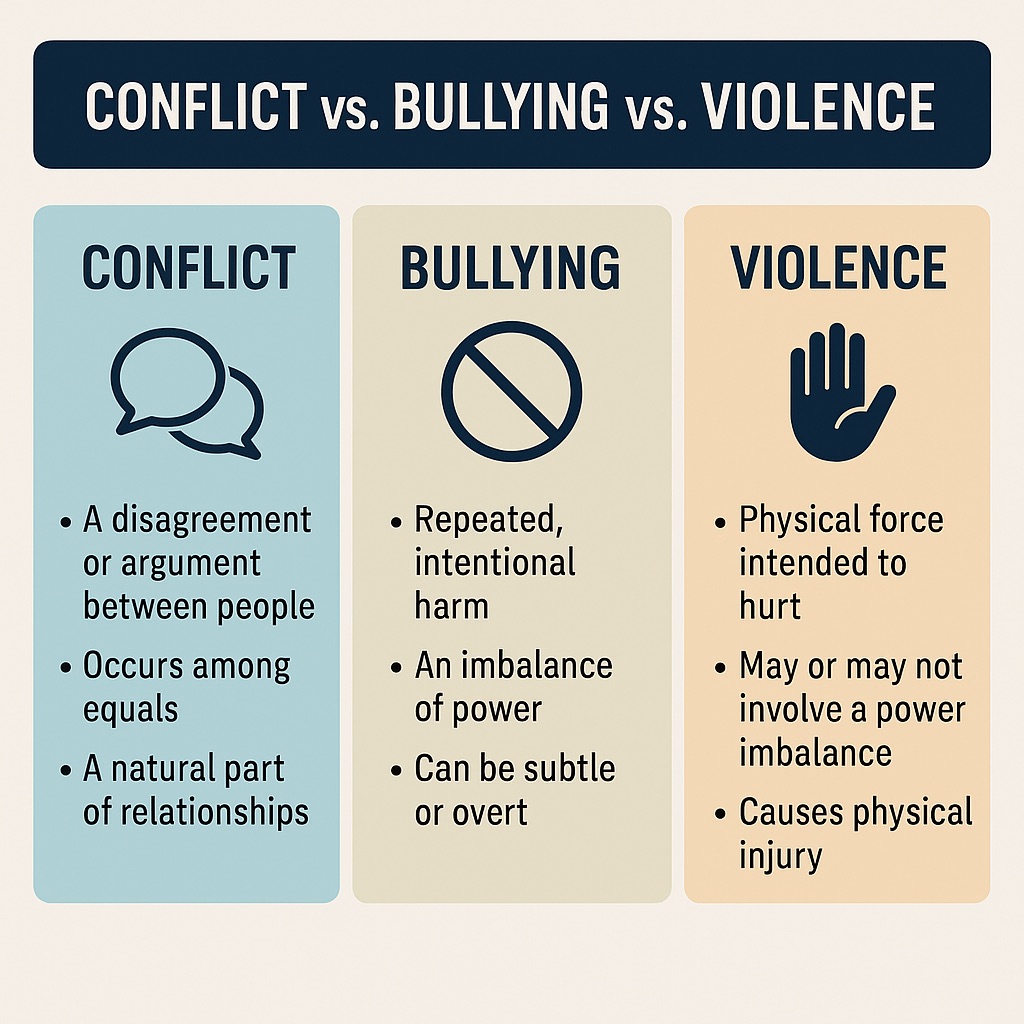
Many adults assume they understand bullying, but common myths often blur the lines between conflict, bullying, and violence. These are not the same—and each requires a different response. Understanding these distinctions is the first step toward effective bullying prevention.
One of the most misunderstood aspects of childhood aggression is the difference between conflict, bullying, and violence. Parents, teachers, and even kids often lump these together, but they are very different—and knowing which one you’re dealing with determines the right response.
Conflict
Definition: A mutual disagreement or struggle between two or more individuals.
Key Traits:
Equal power between parties
Happens occasionally or situationally
Both sides are upset and trying to resolve something
Can be resolved through communication or compromise
Example: Two kids argue over who gets the ball first at recess. They both feel wronged but are capable of solving it with help.
Best Approach: Conflict resolution skills—like listening, taking turns speaking, and problem-solving—are most effective here.
Bullying
Definition: Targeted, repeated behavior where one child intentionally harms another who has less power (social, physical, or emotional).
Key Traits:
Power imbalance (age, size, popularity, ability)
Repeated over time
Purpose is to control, hurt, or humiliate
The target feels helpless and unsafe
Example: One child repeatedly calls another names, spreads rumors, or isolates them socially, and the target feels unable to stop it.
Best Approach: Empowerment + adult intervention. Kids need tools to recognize bullying, build confidence, and respond—not just ignore it. This is where kids self defense and hybrid martial arts skills can shine.
Violence
Definition: The intentional use of physical force or threats to cause harm or intimidate, regardless of power dynamics or repetition.
Key Traits:
Can be one-time or repeated
Physical harm or threats are present
Can be peer-to-peer or adult-to-child
May or may not involve a relationship
Example: A student punches another in the hallway. It may or may not be bullying—but it is violence.
Best Approach: Immediate adult intervention and physical safety protocols. If necessary, self defense techniques are used
The 15 Skills That Protect Against Bullying
Each of these skills targets a risk factor for bullying. They can be taught in any order, but we’ve laid them out in the most straightforward progression. These principles are rooted in both psychology and practical martial arts for kids training.
- 1. Recognition: Help your child understand the difference between teasing, conflict, and bullying. It’s essential to start here.
- 2. What Is Bullying? Define it clearly: repeated, targeted, and imbalanced actions meant to hurt. Context and power dynamics matter.
- 3. Think: Teach your child to pause and process the situation before reacting.
- 4. Awareness – When and Where: Understanding environments where bullying happens most (like unsupervised areas) builds vigilance.
- 5. Breathe – Four Square: A simple breathing method to manage fear and stress in real time. Martial arts breathing techniques are perfect here. This allows for calm decision-making.
- 6. Thoughts – Focus Your Mind: Combat negative self-talk with focused, confident thinking. Inner strength supports outward confidence.
- 7. Decide – What Do I Do? Empower kids to evaluate choices: ignore, seek help, move away, or respond assertively – before moving into self defense skills for kids. This follows the timeline for self defense that we teach in Combat Club.
- 8. Act: Turn planning into action with calm and purpose—key elements of any hybrid martial arts system.
- 9. Body – How Do I Appear? Posture, gestures, and body language play a huge role in how kids are perceived by peers.
- 10. Distance: Personal space awareness helps kids create physical and psychological boundaries.
- 11. How Do I Look? Teach kids to project confidence through facial expression, stance, and eye contact—core components of self defense training.
- 12. How Do I Talk? Voice matters. Assertiveness training is just as important as physical skills in martial arts for kids.
- 13. Tattling vs Telling: Help kids understand the difference so they can confidently report real problems without feeling like a “snitch.”
- 14. Lead: Instill leadership values. Leaders stand up for themselves—and for others.
- 15. Understand Other Kids: Build empathy. Understanding others’ emotions and motivations is key to conflict resolution and teamwork.
How to Use This Framework
At Combat Club, we incorporate teaching these skills into each lesson plan. We recommend spending a few weeks on each skill, but you will need to loop back for practice and repetition. You can jump around based on your child’s needs, but long-term integration is key. Teachers and coaches often find “Tattling vs Telling” particularly useful in real-time classroom or group settings.
At Combat Club, we don’t just train young martial artists—we raise strong, smart, and self-aware kids ready to lead. Our hybrid martial arts curriculum combines physical self-defense with life skills that equip children to face challenges with clarity and courage.
Ready to Empower Your Child?
Join us at Combat Club to explore our full programs teaching hybrid martial arts and self defense for kids. Whether your child is facing bullying or just needs more confidence, we’re here to support their journey.
The transformations we have seen in children over the years are remarkable. We are proud of the part we play in their self-improvement.
We invite you to visit Combat Club and see how martial arts training can help reduce your screen time. Start with your two week Free Trial or contact us with any questions.
FAQ’s
A: Conflict is usually a temporary disagreement between equals that can be solved with communication. Bullying, on the other hand, is targeted, repeated, and involves a power imbalance where one child feels helpless.
A: Physical skills alone don’t solve bullying. Kids also need awareness, emotional regulation, communication tools, and confidence. When combined with martial arts training, these skills prepare children to handle social and physical challenges effectively.
A: Many skills, such as recognition, assertive communication, and empathy, can be practiced at home. However, structured martial arts programs like Combat Club reinforce them through repetition, role-play, and real-time practice with peers.
A: Bullies often target kids who appear insecure or unsure. Confident body language, eye contact, and assertive speech send signals that discourage bullying before it starts.
A: No. The framework is designed for all children. Building these skills early helps prevent bullying, strengthens resilience, and prepares kids for future challenges in school and life.
